



-
Date:2025-12-11

-
Page View:124

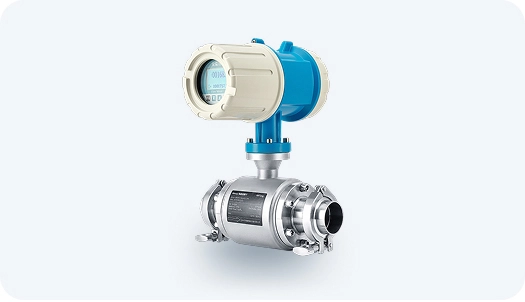
Mass meters are essential measurement tools widely used in industrial production and scientific research. They are primarily designed to accurately measure the mass flow rate of fluids such as gases and liquids. Unlike volumetric flow meters, mass meters directly measure the mass of the fluid, providing a more precise reflection of its flow characteristics. As one of the key components in various automated control and process control systems, mass meters play an irreplaceable role. They are widely applied in industries such as chemicals, petroleum, natural gas, and pharmaceuticals.
What are Mass Meters?
Mass meters directly measure the mass flow rate of the medium passing through the meter. They can also measure properties such as density, temperature, and viscosity. A mass meter is a type of instrument used to measure the mass flow within a pipeline. The volume of a fluid is dependent on temperature and pressure, making it a variable. In contrast, the mass of a fluid does not change with time, location, temperature, or pressure.
Types of Mass Meters
1. Coriolis Mass Flow Meters
Coriolis mass flow meters are based on the Coriolis effect. They calculate the mass flow of a fluid by measuring the vibration changes caused by the fluid flowing through the sensor tube. Their main advantages include high measurement accuracy and stable output over a wide flow range, making them widely used in petrochemical, food & beverage, and pharmaceutical industries. Coriolis meters are suitable for measuring liquids and gases with high viscosity or strong corrosiveness, and their measurement results are not affected by changes in fluid temperature or pressure.
2. Thermal Mass Flow Meters
Thermal mass flow meters measure fluid flow based on the principle of heat transfer. When the fluid passes through the sensor, the heating element changes the temperature of the fluid, and the flow rate affects the rate of heat dissipation, allowing the instrument to calculate the flow. Thermal mass flow meters are particularly suitable for gas measurement and applications that require fast response times. They are commonly used in industrial gas systems, environmental protection, and gas metering applications, providing real-time flow monitoring data.
3. Vibrating-Tube Mass Flow Meters
Vibrating-tube mass flow meters calculate mass flow by measuring changes in the vibration frequency caused by the fluid moving through the tube. Their working principle is similar to that of Coriolis mass flow meters, but they feature a simpler structure and design, making them more cost-effective and suitable for applications with medium accuracy requirements. These meters are widely used in industries such as petroleum, chemical processing, energy, and aviation. They can efficiently measure both liquid and gas flow, and they are particularly valued in industrial environments for their stability and durability.
4. Differential Pressure Mass Flow Meters
Differential pressure mass flow meters measure mass flow based on the differential pressure principle. They calculate mass flow by measuring the pressure drop as the fluid passes through a specific restriction in the pipeline and combining that data with the fluid’s density and velocity. These meters are suitable for stable and predictable flow conditions and are commonly used in industries such as natural gas, steam, and petroleum. Although their accuracy is generally lower than other types of mass flow meters, they remain widely used due to their relatively low cost and easy maintenance.
5. Positive Displacement Mass Flow Meters
Positive displacement mass flow meters determine flow rate through mechanical rotation. As the fluid moves through the meter, it drives internal mechanical components to rotate, and the flow rate is calculated based on the number of rotations. This type of meter is typically used for measuring liquid flow and is suitable for applications where the flow is steady, the fluid is free of bubbles, and the viscosity is relatively low. Positive displacement mass flow meters are widely applied in gas stations, beverage production, fuel transfer, and similar fields.
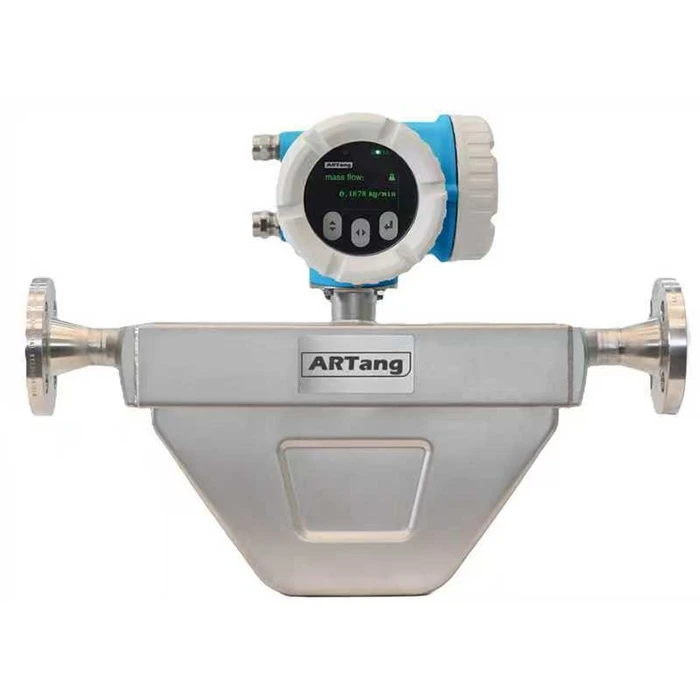
Coriolis Mass Flow Meters
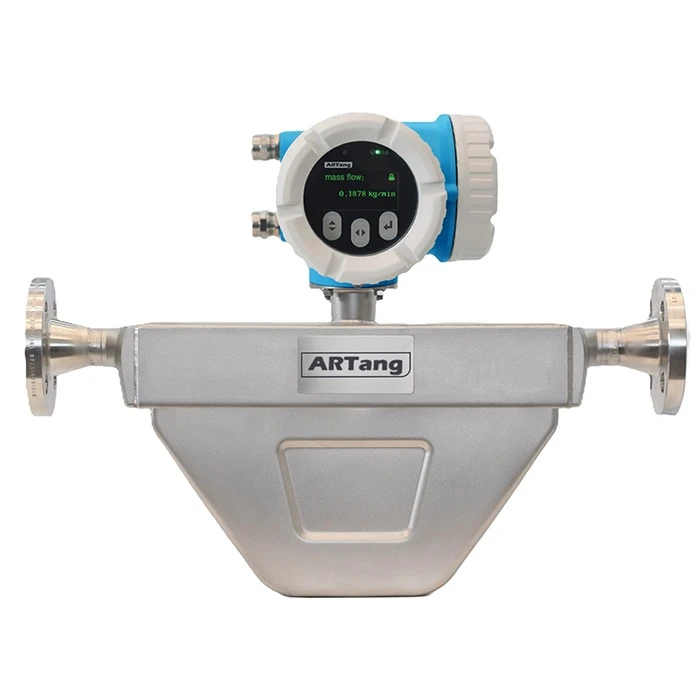
Mass Meters
How to Select a Mass Meters
1. Characteristics of the Measured Medium
(1) Medium State
Mass meters are typically used to measure gases and liquids, and in certain specialized industrial scenarios, gas–liquid two-phase flow may also be involved. Different medium states have a significant impact on various aspects of the flow meter’s performance.
(2) Corrosiveness
When measuring corrosive media, choosing the proper material is crucial. Different corrosive substances cause different levels of erosion. Selecting corrosion-resistant materials that match the media characteristics helps extend the service life of the mass flow meter.
(3) Viscosity
Viscosity must also be considered. High-viscosity media—such as honey, asphalt, or lubricating oil—experience higher flow resistance in pipelines, which affects measurement accuracy and pressure loss. In such cases, larger-diameter sensors are usually required to reduce pressure drop and maintain accurate measurement.
2. Pipe Size and Flow Range
(1) Determining the Flow Range
When selecting a model, it is essential to determine the minimum and maximum flow rates in actual operation. The chosen flow meter must fully cover and adapt to the range of flow variations. Ideally, normal flow should fall within 30%–70% of the meter’s range to ensure stable and accurate performance.
(2) Relationship Between Pipe Diameter, Viscosity, and Pressure Loss
While meeting flow requirements, the viscosity of the medium is also a key factor in selecting the pipe size. As noted earlier, high-viscosity media require larger pipe diameters to reduce pressure loss.
You must also consider pressure-loss requirements. Generally:
Smaller nominal diameters → higher measurement accuracy but greater pressure loss.
Larger nominal diameters → lower pressure loss but slightly reduced accuracy and higher cost.
3. Measurement Accuracy
(1) Accuracy Requirements Vary by Industry
Different industries require different accuracy levels. Coriolis mass flow meters can achieve accuracy up to ±0.1%, effectively avoiding volumetric measurement errors caused by temperature and pressure fluctuations.
(2) Factors Influencing Accuracy
Accuracy is not constant and may be affected by multiple conditions. Variations in temperature and pressure can influence measurement results. Medium characteristics (such as corrosiveness or solid particles) and long-term operational stability of the meter also play important roles.
4. Temperature and Pressure
(1) Temperature Considerations
When the medium temperature exceeds 180°C, a remote-type mass flow meter is recommended, and high-temperature components should be selected for the sensor.
(2) Pressure and Safety Margin
The flow tube and flanges have specific pressure ratings. Ensure that the flow tube pressure rating and the flange pressure class exceed the user’s operating pressure, with a sufficient safety margin.
5. Installation Conditions and Environment
(1) Installation Methods
Mass flow meters can be installed in several ways, such as insertion-type and inline (pipeline) installations.
Insertion-type: suitable for large-diameter pipelines; easier to install and maintain without major pipe modifications.
Inline type: suitable for smaller pipelines or applications requiring higher accuracy.
(2) Environmental Factors
Ambient temperature, humidity, corrosiveness, and explosion-proof requirements all influence the selection of a mass flow meter.
Selecting a mass meter requires comprehensive consideration of the medium characteristics, pipe size and flow range, measurement accuracy, operating temperature and pressure, and installation/environmental conditions. Only by thoroughly understanding your process requirements and evaluating all relevant factors can you choose the most suitable mass meter for your application.


