



-
Date:2025-12-09

-
Page View:127

Wastewater flow meters play a vital role in monitoring and controlling wastewater treatment processes, ensuring that waste handling is carried out efficiently. The data collected by these flow meters can be used to optimize wastewater treatment operations. By analyzing flow patterns and flow rates, authorities and industries can identify areas for improvement and implement strategies that enhance overall efficiency. This not only reduces operating costs but also minimizes the environmental impact of wastewater treatment activities.
Types of Wastewater Flow Meters
There are many types of wastewater flow meters, each with its own advantages, limitations, and application scenarios. The most commonly used types include electromagnetic flow meters, ultrasonic flow meters, and open-channel flow meters.
Electromagnetic Flow Meters:
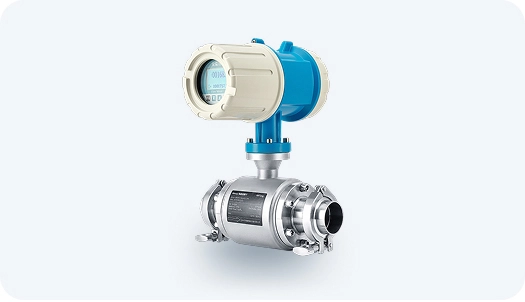
These meters measure the flow of conductive liquids—such as wastewater—based on Faraday’s law of electromagnetic induction. They offer high accuracy and reliability, making them suitable for a wide range of applications.
Ultrasonic Flow Meters:
These meters use ultrasonic waves to measure the velocity of wastewater. They are non-intrusive and can be used in both clean-water and wastewater applications.
Open-Channel Flow Meters:
These instruments are designed to measure sewage flow in open channels, such as rivers or canals. They provide accurate measurements even under harsh environmental conditions.
Working Principles of Wastewater Flow Meters
Electromagnetic Flow Meters
Electromagnetic flow meters operate based on Faraday’s law of electromagnetic induction and are designed for measuring the flow of conductive liquids. Their advantages include having no moving parts, strong corrosion resistance, and high accuracy, making them ideal for measuring complex fluids such as wastewater.
Ultrasonic Flow Meters
Ultrasonic flow meters measure fluid velocity by transmitting and receiving ultrasonic signals. They feature non-intrusive measurement, no flow obstruction, and no mechanical wear. These advantages make them suitable for a wide range of wastewater applications, especially where flow rates vary significantly.
Open-Channel Flow Meters
Open-channel flow meters typically use a combination of a primary device (such as a flume or weir) and a secondary device (such as a level sensor or ultrasonic sensor). The primary device defines the water flow depth, while the secondary device measures the water level. By combining these values, the meter can calculate the flow rate of wastewater in the open channel.
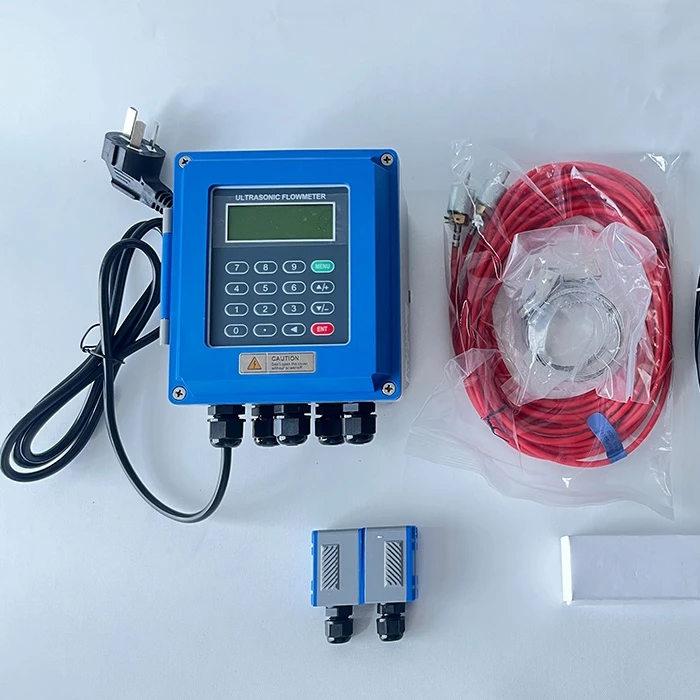
ultrasonic water flow meter
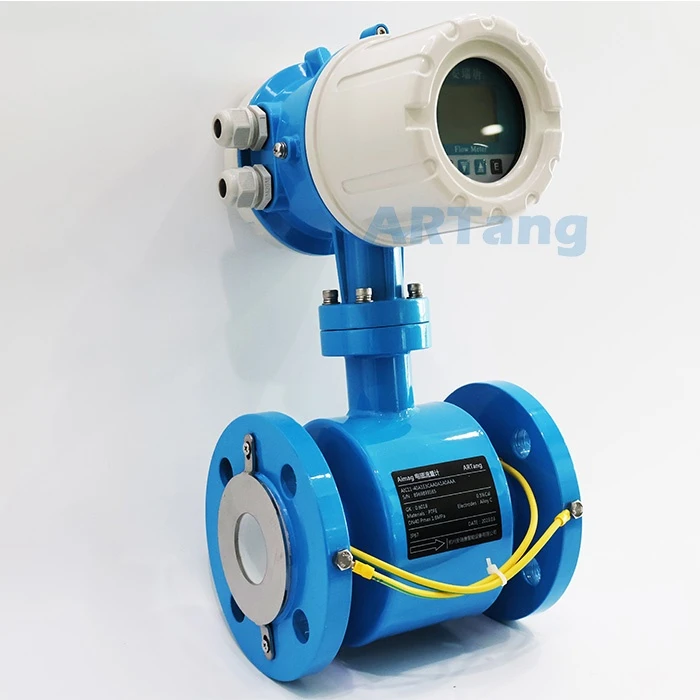
Magnetic Wastewater Flow Meter
Factors to Consider When Selecting a Wastewater Flow Meter
When choosing a wastewater flow meter, several key factors should be taken into account, including the following:
1. Selection of Diameter and Measurement Range
The transmitter diameter is typically selected to match the diameter of the pipeline system. If the pipeline has yet to be designed, the diameter can instead be determined based on the expected flow range and flow velocity.
The measurement range of the transmitter should follow two principles:
The full-scale range of the meter must exceed the anticipated maximum flow rate.
The normal operating flow rate should exceed 50% of the meter’s full-scale range to ensure measurement accuracy.
2. Temperature and Pressure Requirements
Wastewater flow meters operate within specific pressure and temperature limits. The operating pressure must always remain below the meter’s rated working pressure.
The operating temperature depends on the liner material. Standard wastewater flow meters typically support 5–70°C, though special designs can exceed this range. Transmitters generally allow media temperatures between -40°C and +130°C.
3. Selection of Liner and Electrode Materials
The liner and electrode materials of the transmitter must be selected based on the physicochemical properties of the medium. Choosing the wrong materials can lead to corrosion of the liner or electrodes, resulting in rapid meter failure. For highly corrosive media, leakage may also pose serious safety risks. Therefore, the materials must be chosen carefully according to the exact process conditions and fluid characteristics.
4. Environmental Conditions
Consider the environmental conditions where the meter will be installed—such as temperature, humidity, and the presence of corrosive substances—to ensure the device can withstand those conditions.
5. Installation Requirements
Consider installation constraints and requirements to ensure compatibility with existing systems and infrastructure.
Comparison of Meter Types for Sewage Applications
Each type of flow meter has its own advantages and limitations. Selection should be based on actual process needs:
These offer stable measurement and wide applicability, suitable for a variety of media. However, they can be affected by electromagnetic interference. Their cost also increases significantly with larger pipe diameters.
These are relatively low-cost, provide high accuracy, operate stably, and are easy to install and maintain. Unlike electromagnetic meters, their cost does not rise substantially with pipe diameter, though it may increase with the number of ultrasonic paths.
Open-Channel Flow Meters
These have a wide measurement range and are not affected by changes in media properties. However, they are limited by the size and design of the flume or weir. In open-channel systems with sufficient installation conditions and large flow volumes, weir-type and flume-type meters are often used to measure sewage flow.
Installation and Maintenance of Wastewater Flow Meters
Proper installation and routine maintenance are essential for ensuring optimal performance of wastewater flow meters. When installing a sewage flow meter, it is crucial to follow the manufacturer’s guidelines and recommendations. This includes selecting an appropriate installation location, ensuring proper alignment and orientation, and performing thorough calibration.
Regular maintenance typically involves cleaning, calibration, and inspection. The meter should be cleaned periodically to remove any debris or buildup that may accumulate on the sensor. Calibration should be conducted regularly to maintain measurement accuracy. Additionally, routine inspections are necessary to identify any signs of damage or wear so issues can be addressed promptly before they lead to equipment failure.
Wastewater flow meters play a critical role in monitoring and controlling wastewater treatment processes, helping ensure sewage management is efficient and effective. When selecting a wastewater flow meter, it is important to consider factors such as accuracy requirements, flow range, environmental conditions, installation constraints, and maintenance needs.
If you need a reliable and accurate wastewater flow meter for your wastewater operations, feel free to contact ARTang, a trusted and experienced flow meter manufacturer.


