



-
Date:2025-12-25

-
Page View:96

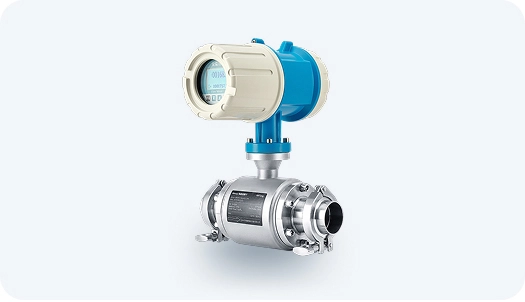
Hygienic magnetic flowmeter are precision instruments specifically designed to meet the stringent hygienic requirements of fluid measurement. Their core components are made from hygienic-grade materials to ensure compliance with food safety standards. Featuring easy-to-clean, dead-zone-free designs, hygienic magnetic flowmeter help prevent cross-contamination and play a critical role in industries such as food processing, pharmaceuticals, and chemicals.
Structural Features of Hygienic Magnetic Flowmeter
1.Measuring Tube:
The measuring tube is made of corrosion-resistant, non-toxic materials such as stainless steel (e.g., 316L) or Hastelloy. Its smooth inner surface and dead-zone-free design prevent liquid residue and bacterial growth. Some models use seamless welding technology to ensure a joint-free tube structure that meets sanitary standards.
2.Electrodes:
The electrodes are made of the same material as the measuring tube and are typically flush-mounted with the inner pipe wall. This design minimizes flow disturbance and allows for easy cleaning. Some high-end models are equipped with scraper electrodes that can remove deposits from the electrode surface online, ensuring stable and reliable measurement.
3.Liner Materials:
Food-grade and pharmaceutical-grade elastomeric materials such as PTFE and PFA are used as liners. These materials offer excellent corrosion resistance, high-temperature tolerance (typically −20°C to 180°C), non-stick properties, and chemical inertness, ensuring they do not react with the measured fluid.
4.Housing and Connection Types:
The housing is made of stainless steel and provides waterproof and dustproof protection, typically rated IP67 or IP68. Common connection types include quick-release hygienic fittings (such as clamp connections) or flanged connections, allowing for easy disassembly, cleaning, and maintenance. These designs fully support CIP (Clean-in-Place) and SIP (Steam-in-Place) processes.
5.Excitation System:
Advanced low-frequency square-wave excitation or dual-frequency excitation technology is used to reduce fluid noise and electromagnetic interference, improving measurement accuracy. This is especially beneficial for pulsating flows or fluids containing small amounts of air bubbles.
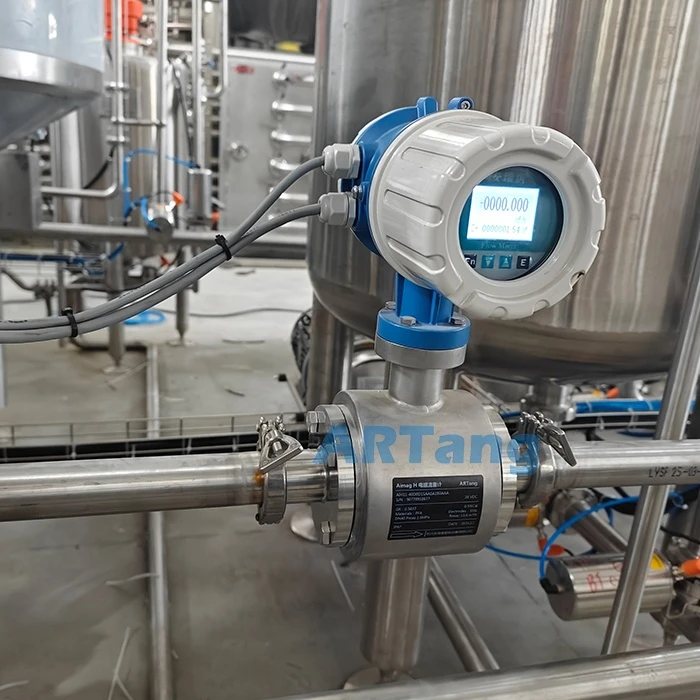
Sanitary Flow Meters for Beer
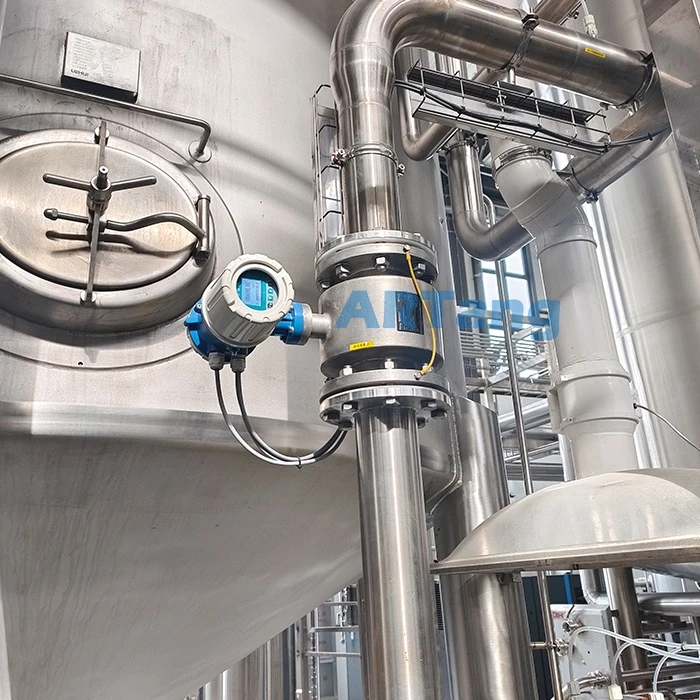
Food & Beverage Flow Meters
Key Features of Hygienic Magnetic Flowmeter
1. High Hygienic Standards:
Features a polished finish (Ra ≤ 0.8 μm) and complies with international hygienic certifications such as 3-A and EHEDG. The smooth, dead-zone-free inner surface effectively prevents microbial growth and supports CIP/SIP cleaning and sterilization, meeting the strict hygiene requirements of the food and pharmaceutical industries.
2. High Accuracy and Stability:
Unaffected by fluid properties such as density, viscosity, temperature, or pressure. Maintains high measurement accuracy even for pulsating flows and high-viscosity fluids (e.g., syrups and ointments), with fast response times (typically ≤ 0.5 s).
3. Easy Maintenance:
Clamp-type connections allow quick installation and removal, enabling fast internal cleaning or component replacement. Some models feature self-diagnostic functions that monitor instrument status in real time, reducing maintenance costs.
4. Wide Application Range:
Suitable for conductive liquids as well as slurries containing small solid particles (such as juices and sauces). However, excessive air bubbles or high concentrations of non-conductive substances should be avoided, as they may affect measurement accuracy.
5. Smart Integration:
Supports communication protocols such as 4–20 mA, HART, and Modbus, allowing seamless integration with DCS/PLC systems for intelligent monitoring and control.
6. Strong Anti-Interference Capability:
Utilizes advanced excitation technology and signal processing algorithms to resist external electromagnetic interference and fluid noise, ensuring stable operation in complex industrial environments.
Application Areas of Hygienic Magnetic Flowmeter
1. Food and Beverage Industry
In the production of dairy products, juices, beer, condiments, and similar products, hygienic magnetic flowmeter are used to measure the flow of various liquid media. Their 316L stainless steel or PTFE-lined construction meets food-grade standards, preventing media contamination. In addition, the full-bore design with no flow obstructions facilitates CIP (Clean-in-Place) and SIP (Steam-in-Place) processes, ensuring hygienic and safe production lines.
2. Pharmaceutical and Biotechnology Industry
The pharmaceutical industry places extremely high demands on both measurement accuracy and hygiene, especially for the transfer of media such as Water for Injection (WFI), purified water, culture media, and pharmaceutical solutions. Hygienic magnetic flowmeter use hygienic connections (such as Tri-Clamp fittings) to prevent bacterial growth and comply with GMP (Good Manufacturing Practice) requirements.
3. Cosmetics and Personal Care Industry
Cosmetics manufacturing involves high-viscosity or particle-containing liquids such as lotions, serums, and shampoos. Hygienic magnetic flowmeter offer a wide turndown ratio and strong anti-interference capability for accurate measurement. Their smooth inner surface prevents residue buildup, ensuring compliance with strict hygiene standards in the industry.


