



-
Date:2025-12-30

-
Page View:85

High-temperature pressure transmitter operate beyond the standard temperature range of 85°C to 125°C and can withstand temperatures of up to 800°C. These pressure transmitter, along with high-temperature equipment, provide stable and repeatable output across various industries, including testing and measurement as well as downhole tool operations.
Can a Pressure Transmitter Measure High-temperature Media?
Customers often have this question. Can a pressure transmitter truly measure high-temperature media? The answer is yes—of course. However, a pressure transmitter cannot be in direct contact with high-temperature media. Prolonged exposure to high temperatures can easily damage the pressure transmitter.
Typically, when measuring high-temperature media, the pressure transmitter is equipped with a stainless steel heat dissipation device to prevent direct contact between the medium and the transmitter. In addition, a cooling or condensing tube can be added on top of the heat sink to further reduce the impact of excessive temperature on the transmitter and prevent damage.
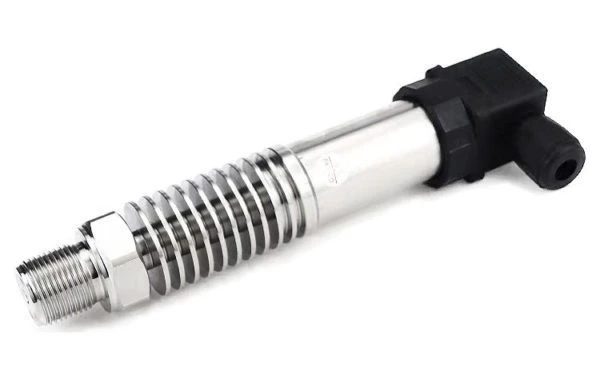
high-temperature pressure transmitter
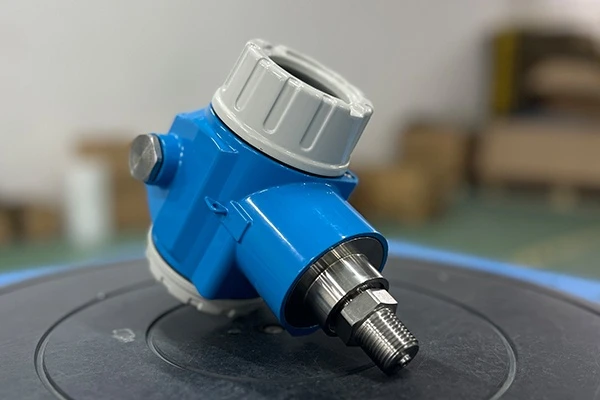
high temp pressure transmitter
How to Protect Pressure Transmitter in High-Temperature Environments?
If a pressure transmitter operates in a high-temperature environment for an extended period without protective measures, its circuit board, electronic components, sealing rings, and sensing element may be damaged or burned out. To ensure long-term, reliable operation, appropriate protection must be implemented.
The typical operating temperature range for most pressure transmitter is -40°C to 85°C. Some high-temperature pressure transmitter models are designed to withstand higher temperatures, up to 130°C or more. When measuring high-temperature media, proper installation is critical—not only for measurement accuracy, but also for the sensor’s service life. Prolonged exposure to high temperatures without protection can easily damage the sensing element, circuit board, or other components.
If the measured medium maintains a long-term temperature of around 70°C to 80°C, a heat sink should be installed during sensor mounting. The heat sink reduces the medium’s temperature before it reaches the sensor, preventing direct contact and ensuring a suitable operating environment for the pressure sensor.
When the medium temperature exceeds 100°C, or even reaches 200°C, adding a heat sink alone is no longer effective. Under such conditions, a cooling (condensing) coil should be installed at the pressure tap, followed by a heat sink. This allows the medium to cool down through the coil first, then dissipate heat through the heat sink, so that the temperature at the pressure sensor is significantly reduced.
The above methods describe several installation approaches for pressure sensors when dealing with excessively high medium temperatures. It should be noted that these methods are different from using an isolation diaphragm. Diaphragm pressure gauges and diaphragm pressure sensors are designed to handle corrosive or clogging media. By transferring pressure through a diaphragm, they prevent direct contact between the medium and the pressure sensor, protecting the sensor from chemical attack or blockage.
Conclusion
When selecting a high-temperature pressure transmitter, multiple factors must be considered, including measurement range, accuracy, stability, temperature resistance, and protection rating. The measurement range should cover the maximum and minimum pressures in the actual application, while the accuracy must meet the process requirements. Stability refers to the sensor’s ability to maintain performance during long-term operation and under temperature fluctuations. Temperature resistance is a key specification for high-temperature pressure transmitters and must ensure reliable operation at the maximum working temperature. The protection rating indicates the device’s resistance to dust and water, which is especially important for outdoor or harsh-environment applications.


