



-
Date:2026-01-22

-
Page View:56

Water EC sensors are key devices for water quality monitoring and a wide range of industrial applications, offering strong market potential. By measuring the electrical conductivity of liquids, they can indirectly reflect critical parameters such as liquid composition, concentration, and temperature. As a result, they play an important role in environmental monitoring, industrial processes, and laboratory applications.
Advantages of Water EC Sensors
1. High Accuracy:
Conductivity sensors can accurately detect changes in liquid conductivity, with measurement accuracy of ±1% or better.
2. Excellent Stability:
Manufactured using specialized materials and processes, the sensors maintain stable performance over long periods of operation, ensuring reliable measurement results. This is especially important for applications requiring continuous, long-term monitoring.
3. Fast Response Time:
Water EC sensors provide rapid response, delivering accurate measurement results within a short time.
4. Wide Application Range:
Water EC sensors are suitable for measuring various types of liquids, including pure water, wastewater, seawater, and industrial process water.
5. High Temperature and Pressure Resistance:
Some conductivity sensors are designed to withstand high temperatures and high pressures, making them suitable for harsh environments such as chemical processing and petroleum industries.
6. Easy Operation:
Conductivity sensors are simple to operate and do not require special skills or tools, allowing users to get started quickly.
7. Smart Monitoring and Management:
Water EC sensors can be integrated with intelligent systems to enable remote monitoring and centralized management.
8. Environmental Protection Support:
Conductivity sensors enable accurate monitoring of water pollution levels, providing strong support for environmental management. Real-time water quality monitoring helps detect and address pollution issues promptly.
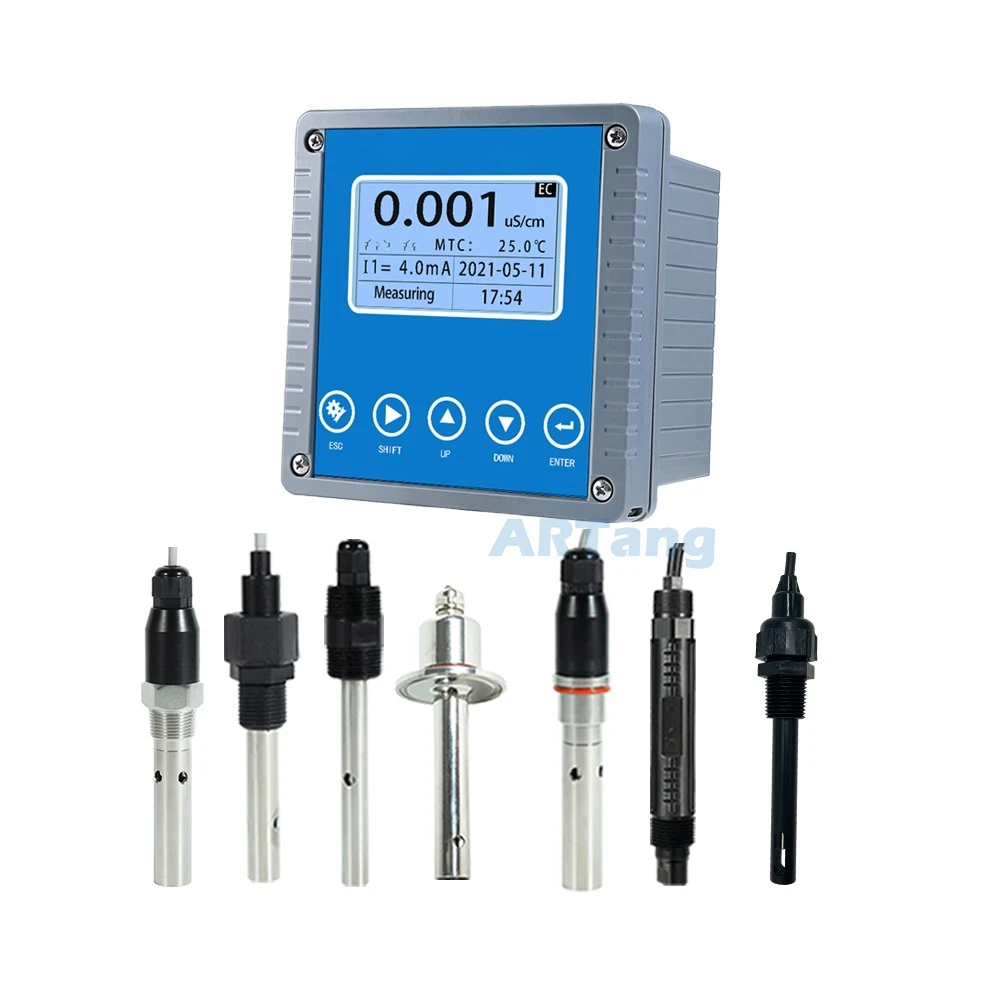
Water EC Sensors
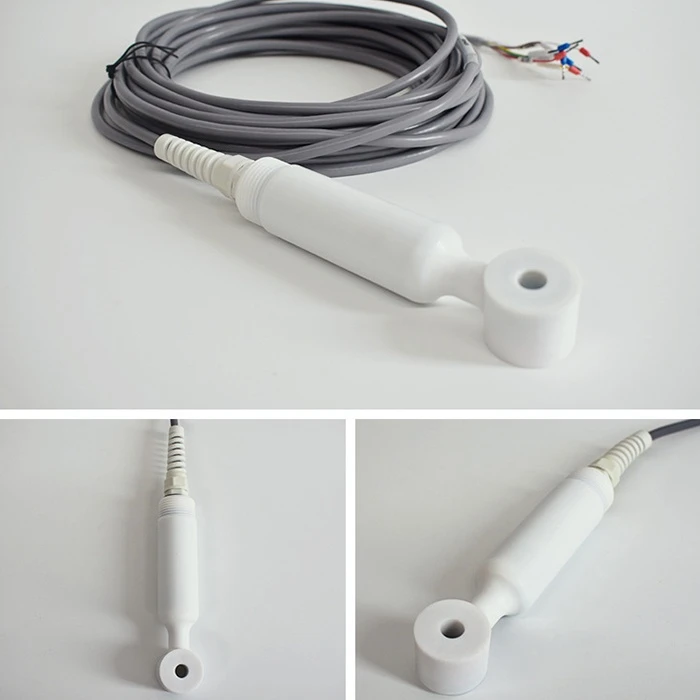
electrical conductivity sensor
Disadvantages of Water EC Sensors
1.Susceptibility to Polarization Effects
Even when alternating voltage is used, slight polarization may still occur on the electrode surface in high-conductivity solutions (such as concentrated brine or high-concentration electrolytes). This ion accumulation or charge buildup can increase the measured resistance, resulting in a lower apparent conductivity and measurement errors.
2.Limited Accuracy in High-Purity Water
In ultrapure or high-purity water (conductivity < 10 μS/cm), the ion concentration is extremely low and the resulting current is very weak. Under these conditions, contact resistance between the electrodes—such as lead wire resistance or resistance caused by surface oxidation—becomes significant and can mask the true conductivity of the solution, leading to large measurement deviations.
3.Sensitivity to Electrode Fouling
If the solution contains organic matter, colloids, or substances prone to precipitation (such as scale formed by calcium and magnesium ions), the electrode surface can easily become contaminated. This creates an insulating layer that adds extra resistance and affects measurement stability. Frequent cleaning is required to maintain accuracy.
4.Significant Temperature Influence
Although EC sensors are typically equipped with temperature compensation, in applications with rapid temperature fluctuations (such as high-temperature industrial wastewater), the compensation algorithm may not fully offset the effect of temperature on ion mobility, resulting in short-term measurement errors.
Therefore, when using water ec sensors , it is essential to fully consider both their strengths and weaknesses and select an appropriate sensor model and measurement range based on actual application requirements to ensure accurate and reliable measurement results.


