



-
Date:2026-01-05

-
Page View:88

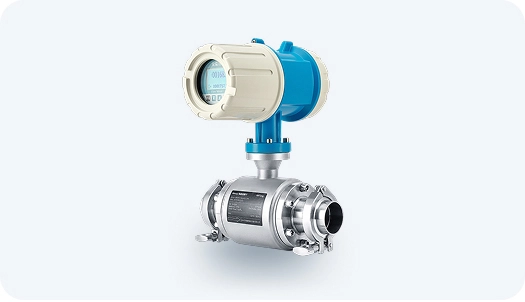
As a key instrument for measuring the electrical conductivity of solutions, a inline conductivity sensor determines water quality or process parameters by quantifying the concentration of ions in a liquid. The three most common types are electrode-type, inductive (toroidal), and ultrasonic conductivity sensors. Below is an overview of the main electrode-type sensors.
Electrode-Type Conductivity Sensors
Electrode-type sensors work on the principle of electrolytic conduction. They determine conductivity by measuring the electrical resistance of a solution. Depending on the electrode configuration, these sensors are divided into two-electrode and four-electrode types.
(1) Two-Electrode Sensors
Two-electrode sensors consist of a pair of flat electrodes. A constant voltage is applied to drive ions in the solution to move in a specific direction, generating current. According to Ohm’s law, the current intensity is inversely proportional to the resistance of the solution, thus reflecting its conductivity.
This type of sensor features simple structure and low cost, making it ideal for basic conductivity monitoring of clean liquids.
For example:
In drinking water treatment, two-electrode sensors quickly detect changes in ion concentration to ensure water quality meets safety standards.
In laboratory analysis, their portability makes them a preferred tool for routine conductivity screening.
(2) Four-Electrode Sensors
Four-electrode sensors use a coaxial design consisting of two current electrodes and two voltage electrodes. The current electrodes apply an AC signal to create an electric field, while the voltage electrodes measure the potential difference to eliminate polarization effects.
This design significantly improves measurement accuracy and stability, particularly for high-conductivity or scaling-prone liquids.
For instance:
In chemical production, four-electrode sensors monitor changes in electrolyte concentration inside reactors to support process control.
In seawater desalination, their strong anti-fouling capability makes them ideal for long-term salinity monitoring.
Inductive Conductivity Sensors
Inductive conductivity sensors operate based on the principle of electromagnetic induction, determining a liquid’s conductivity by measuring the relationship between the induced current and the magnetic field. Unlike electrode-type sensors, they do not require direct contact with the liquid, offering excellent resistance to contamination and corrosion.
1.Principle of Electromagnetic Induction
When an alternating voltage is applied to the primary coil, conductive ions in the liquid generate eddy currents under the alternating magnetic field. The secondary coil then detects the resulting magnetic field variation to calculate the conductivity. This non-electrode design eliminates polarization and scaling issues, making it ideal for high-conductivity or highly corrosive liquids.
2.Advantages of Non-Contact Measurement
The non-contact design of inductive sensors allows their use in closed pipelines or high-pressure environments. For example, in nuclear power plant cooling systems, these sensors can continuously monitor the conductivity of cooling water to prevent equipment corrosion. In the food processing industry, their corrosion resistance makes them ideal for measuring high-salinity solutions.
Ultrasonic Conductivity Sensors
Ultrasonic conductivity sensors operate based on the propagation characteristics of ultrasonic waves in liquids, determining conductivity by analyzing changes in parameters such as sound velocity and attenuation. These sensors feature non-contact measurement and a wide dynamic range, making them ideal for conductivity monitoring in extreme environments.
1. Ultrasonic Propagation Characteristics
When ultrasonic waves travel through a liquid, their speed and attenuation are influenced by the liquid’s conductivity. In high-conductivity liquids, ions enhance sound wave scattering, resulting in reduced propagation speed or increased attenuation. The sensor calculates conductivity by detecting and analyzing these changes.
2. Adaptability to Complex Environments
Thanks to their non-contact design, ultrasonic sensors can operate reliably in high-temperature, high-pressure, or highly corrosive environments. Built-in multi-parameter compensation algorithms help eliminate interference from temperature, pressure, and other variables, ensuring high measurement accuracy even under challenging conditions.
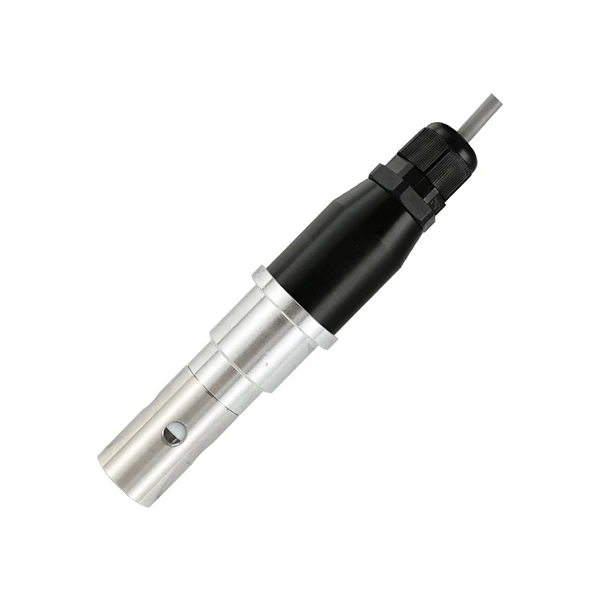
Inline Conductivity Sensor
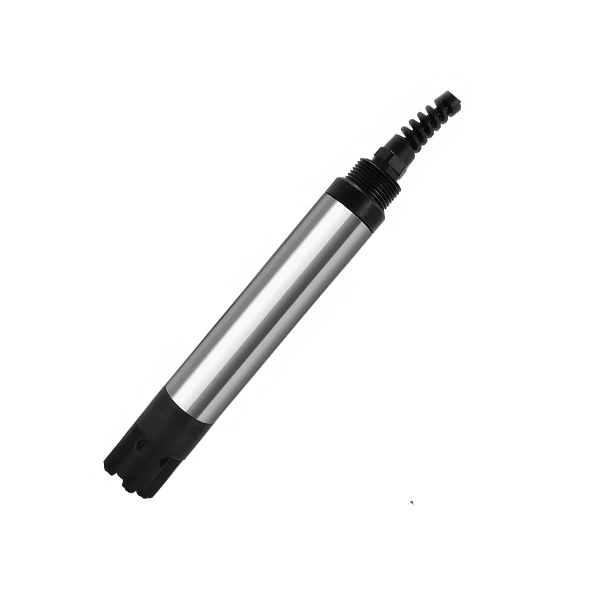
conductivity sensor price
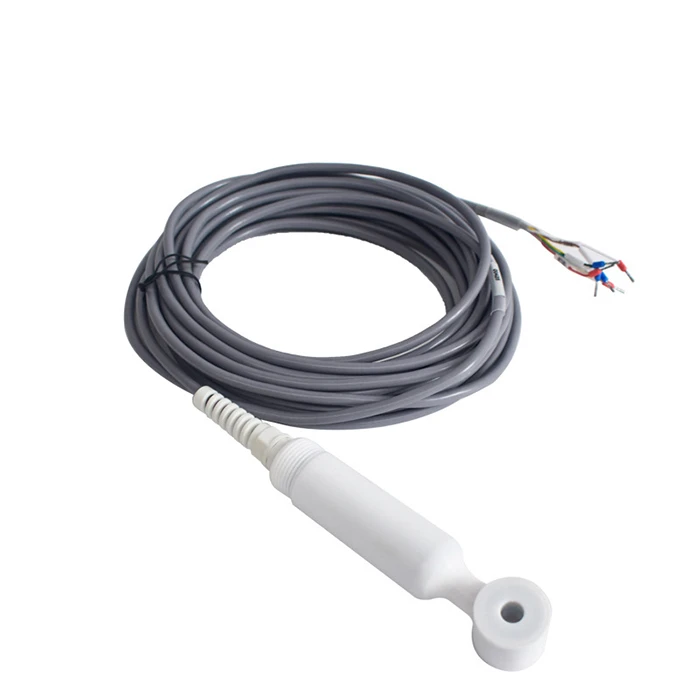
conductivity water sensor
Applications of Inline Conductivity Sensor
1. In the food and beverage industry, inline conductivity sensors are used to monitor the purity and quality of products. For example, conductivity measurements can detect impurities and contaminants in water such as salts, minerals, and microorganisms.
2. In the pharmaceutical industry, these sensors are used to monitor production processes to ensure product quality, consistency, and safety.
3. In the chemical industry, inline conductivity sensors help track chemical reactions to ensure they proceed correctly and under controlled conditions.
4. In the power industry, inline conductivity sensors are applied to monitor the quality and performance of transformer oil. The oil’s conductivity reflects the amount of moisture and impurities it contains, helping determine whether the oil needs replacement or treatment. They are also used to monitor the conductivity of cooling fluids in electrical equipment, ensuring the stable operation of cooling systems.
In the environmental protection field, inline conductivity sensors play a vital role in water quality monitoring and wastewater treatment evaluation. For instance, conductivity can be used to detect heavy metal ions and organic pollutants in water. During wastewater treatment, changes in conductivity reflect the treatment efficiency, guiding process optimization and improving environmental management.


