



-
Date:2025-11-25

-
Page View:151

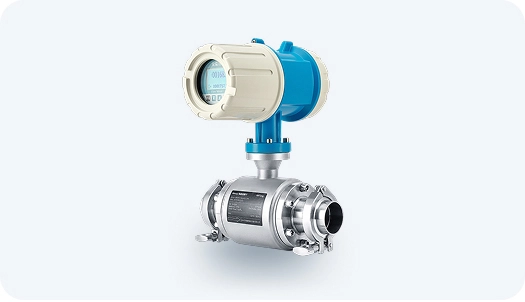
An industrial pressure sensor is a device that detects pressure signals and converts them into usable electrical output signals according to a defined pattern. Pressure sensors typically consist of a pressure-sensitive element and a signal processing unit. Based on the type of pressure being measured, pressure sensors can be classified into gauge pressure sensors, differential pressure sensors, and absolute pressure sensors.
How Do Industrial Pressure Sensors Work?
Pressure sensors generally include a pressure-sensitive element and a signal conditioning module. Depending on the type of pressure being measured, smart pressure sensors can be categorized into gauge pressure sensors, differential pressure sensors, and absolute pressure sensors.
Absolute Pressure Sensors
Absolute pressure sensors are a type of vacuum pressure sensor. Their readings are always referenced to absolute zero, and the output is always positive, while other types of sensors may produce positive or negative values.
These sensors are ideal for measuring atmospheric pressure in critical barometric applications such as weather monitoring or altitude detection in navigation. Barometric pressure sensors rely on establishing a reference value from an absolute vacuum to ensure reliable readings.
Differential Pressure Sensors
Differential pressure sensors measure the pressure difference between two points in a system. This is crucial for ensuring proper system performance, such as checking vent valves or monitoring flow.
Specifications vary, but most differential pressure sensors measure pressure on both sides of a single diaphragm. Depending on how the diaphragm deflects, readings on either side may be positive or negative.
Gauge Pressure Sensors
Gauge pressure sensors are a type of relative pressure sensor. They are commonly used to measure the difference between local atmospheric pressure and the pressure at a specific point within another system.
Applications include checking fluid levels in vented tanks, operating blood pressure monitors, or controlling the speed and power of vacuum pumps. In all of these cases, changes in real-time ambient atmospheric pressure will affect the required calculations and readings.
Types of Industrial Pressure Sensors
Choosing the right pressure sensor requires considering many factors, such as measurement range, accuracy, stability, durability, and installation requirements. Different applications demand different types of sensors to ensure system stability and reliability.
Explosion-proof Pressure Sensors – Intrinsically safe pressure sensors are designed for high-risk environments. We also offer explosion-proof models suitable for extremely hazardous locations.
Hygienic Pressure Sensors – Also known as clamp-type pressure sensors, these combine proven thin-film sensing technology with sanitary isolation seals. They are essential in sanitary processing environments such as food and pharmaceutical applications.
Diaphragm Pressure Sensors – A diaphragm pressure sensor converts pressure changes into electrical signals, allowing pressure variations to be measured through signal output. These sensors are especially suitable for low-pressure measurement applications.
Submersible Pressure Sensors – Also known as level transmitters, these sensors are used to measure pressure in tanks, wells, and similar liquid-level applications.
General-purpose Pressure Sensors – We offer a full range of pressure sensors in various sizes and pressure ranges. You can view all available sensor models on our website.
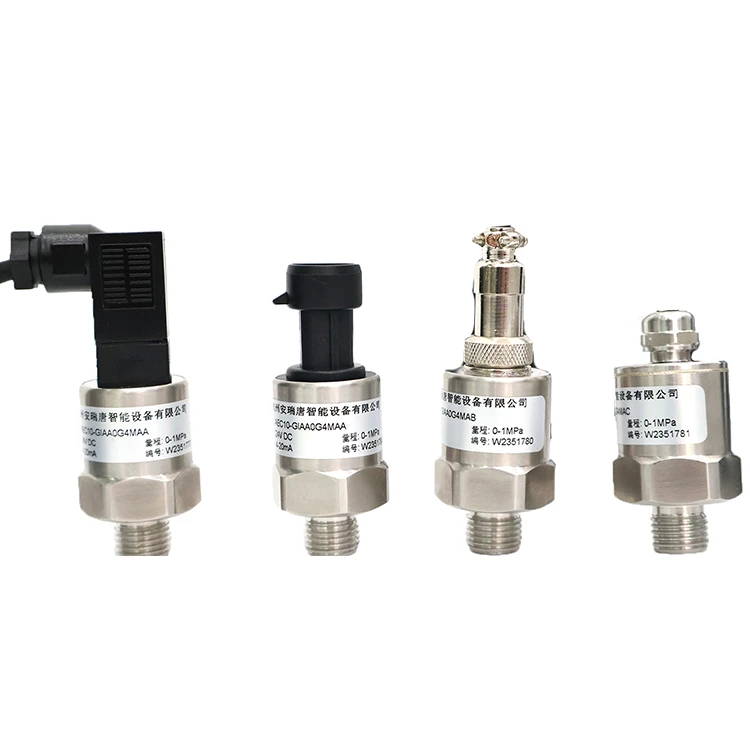
industrial pressure sensor
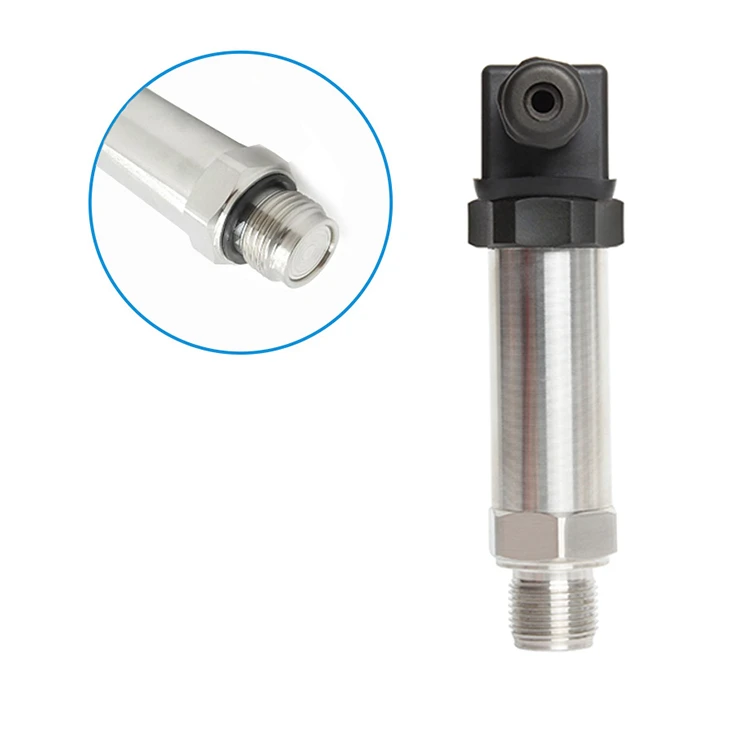
pressure transmitter sensor
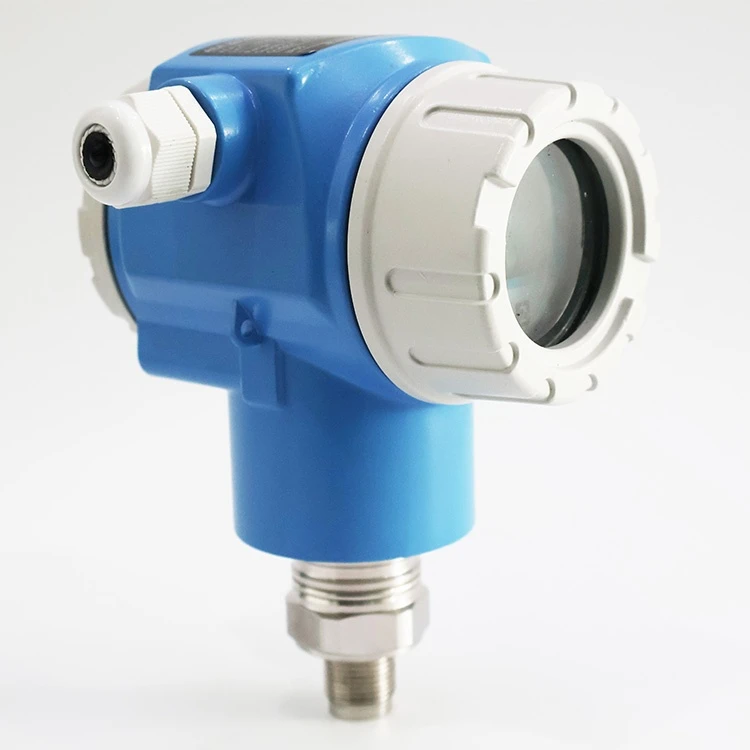
pressure transducer sensor
How to Choose the Right Industrial Pressure Sensor
1. Pressure Range
The sensor must be able to measure the expected pressure range in your application. Choosing a sensor with too narrow a range may result in inaccurate readings or sensor damage, while an overly wide range may reduce sensitivity.
2. Accuracy
The required accuracy depends on the application. High accuracy is essential for critical applications such as medical devices or aerospace systems. For less demanding applications, a lower accuracy sensor may be sufficient.
3. Environmental Conditions
The operating environment significantly affects sensor selection. Consider factors such as temperature, humidity, exposure to corrosive substances, and electromagnetic interference. Some sensors are designed for harsh environments, while others are suitable only for controlled conditions.
4. Output Signal
Consider the type of output signal required by your control system (analog or digital). Some applications may need specific signal types, such as 4–20 mA, 0–5 V, or digital communication protocols like I²C or SPI.
5. Size and Form Factor
The physical size and shape of the sensor can be important, especially in applications with limited space. Miniature sensors are suitable for compact spaces, while larger sensors may offer additional features or greater durability.
7. Compatibility
The sensor must be compatible with the existing system in terms of electrical connections, communication protocols, and mechanical fittings. Compatibility issues can lead to extra costs or require system modifications.
Applications of Industrial Pressure Sensors
1. Industrial Automation
In industrial production, pressure sensors are used to monitor and control the pressure of fluids such as gases and liquids, ensuring that equipment operates within safe pressure limits. For example, in the petrochemical industry, pressure sensors monitor the pressure of pipelines and vessels to prevent explosions and leaks.
2. Automotive Industry
In modern vehicles, pressure sensors are widely used in engine management systems, tire pressure monitoring systems (TPMS), braking systems, and more. For instance, the Manifold Absolute Pressure (MAP) sensor measures intake manifold pressure to optimize fuel injection and ignition timing, improving engine efficiency and emissions performance.
3. Environmental Monitoring
Pressure sensors play an important role in environmental monitoring by measuring parameters such as atmospheric pressure and water depth. Weather stations use barometric pressure sensors to track changes in atmospheric pressure and forecast weather conditions, while oceanographers use depth sensors to measure sea depth and study marine environments.
An industrial pressure sensor can be defined as a device that converts physical pressure into an electrical signal. These sensors are essential components across many industries, playing a critical role in monitoring and control systems by measuring the pressure of gases or liquids. They convert physical pressure into an electrical signal that can be interpreted by computers, control systems, or other measurement instruments. Industrial pressure sensors are suitable for a wide range of applications across different fields.


